


GOVERNMENT-FUNDED FLU VACCINES
In 2026, government funded flu vaccines will be available for free for:
all children aged six months to four years (ie. including four year olds, but not five year olds);
all adults aged 65 years and over;
all people aged from six months with medical conditions putting them at increased risk of severe flu and its complications (for example, severe asthma, lung or heart disease, low immunity or diabetes - see the government website for a specific list);
pregnant women (during any stage of pregnancy); and
all Aboriginal and Torres Strait Islander people aged from six months.
Your consultation will be bulk billed if you have a valid Medicare card. If you don’t, a $28.05 consultation fee will apply.
Note that government-funded flu vaccines are only available from GP clinics and other official vaccination providers (ie. it is not always available from pharmacies).
prIVATE FLU VACCINES
If you don’t qualify for a government funded vaccine, you can get a private flu vaccine from us for $20 with a valid Medicare card and your consultation will be bulk billed.
If you don’t have a Medicare card, you’ll pay a total of $48.05 for the vaccine and consultation fee.
FLU VACCINES:
FREQUENTLY ASKED QUESTIONS
What is the flu?
Influenza (or “the flu”) is a highly contagious viral infection that can cause severe illness and life-threatening complications, including pneumonia. The flu is spread by contact with fluids from coughs and sneezes.
The flu viruses mutate regularly, and there are many different strains – you might have heard of strains such as “swine flu” and “bird flu” that had significant outbreaks in previous years.
The most common symptoms of the flu are the sudden appearance of a high fever, a dry cough, body aches, and feeling extremely weak and tired. Other symptoms can include chills, loss of appetite, sore throat and a runny or stuffy nose. Some people (especially children) also suffer from nausea and vomiting.

How does the flu vaccine work?
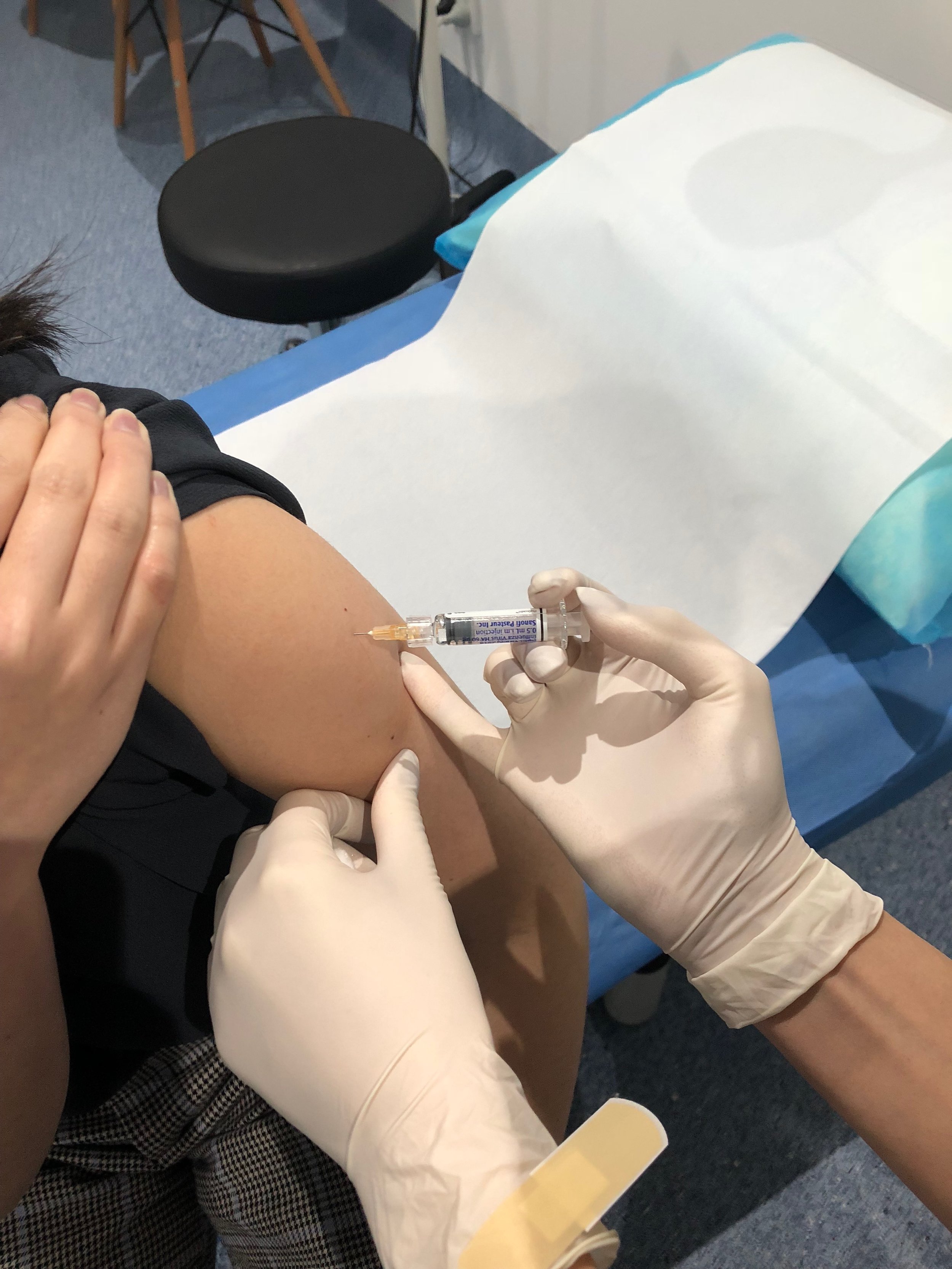
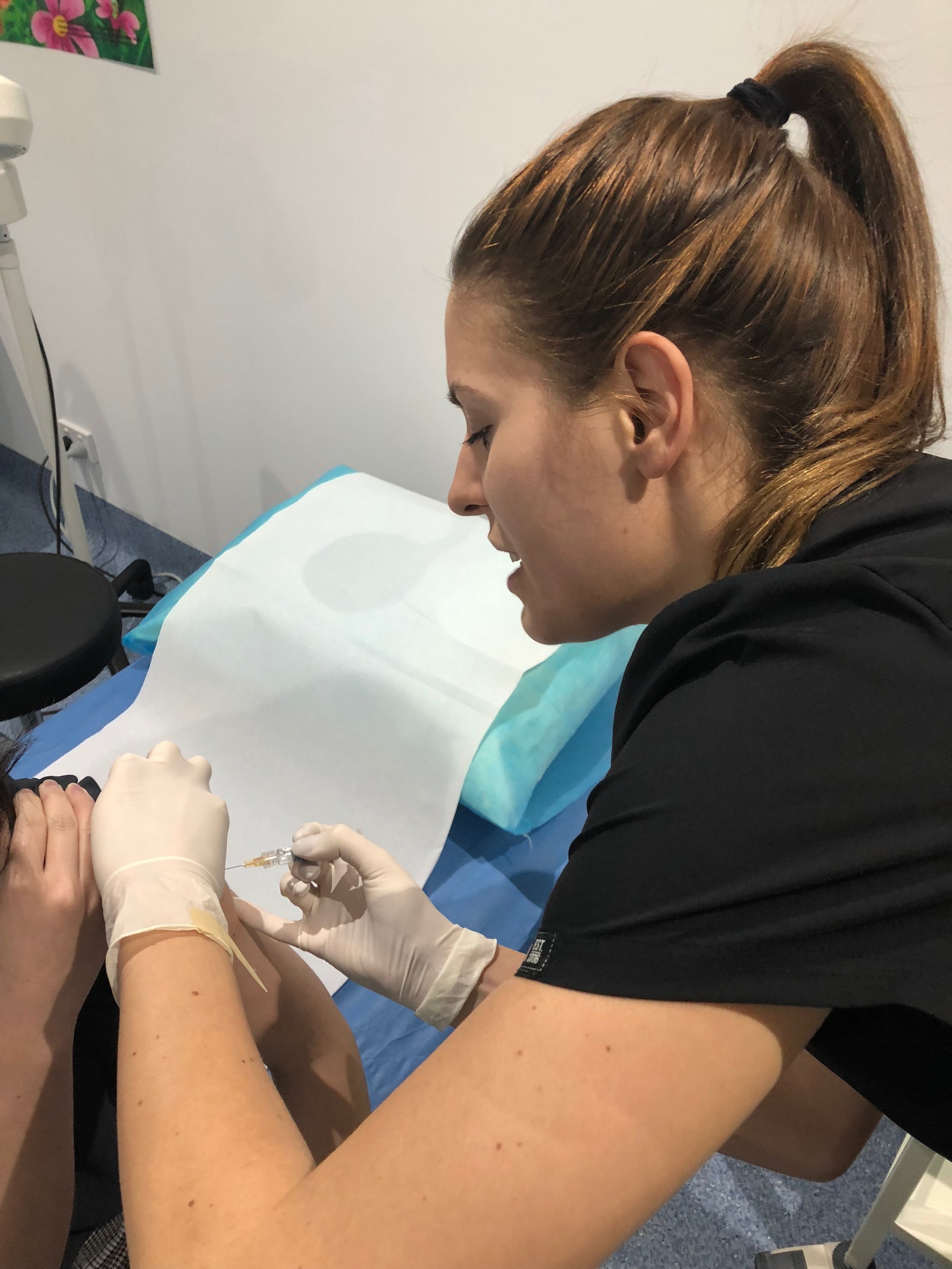
Flu vaccines cause antibodies to develop in the body about two weeks after vaccination. These antibodies provide protection against infection with the viruses that are in the vaccine.
The flu vaccine protects against the influenza viruses that research indicates will be most common during the upcoming season.
Can I get the flu from the vaccine?
No. The flu vaccine is not a “live” vaccine, so you can’t get the flu from the vaccine.
However, it is possible to have reactions – you might feel like you have a minor cold, with symptoms such as a sore throat or runny nose for a couple of days. You might also have a sore arm for a few days. While this is irritating, it is obviously better than contracting actual influenza.
Also, at this time of year it’s quite possible that you will have contracted the flu or a cold in the day or two before you get the vaccine but not yet be showing any symptoms, or you might do so in the week or so after the vaccine (noting that the vaccine takes a few weeks to work).
This means it might feel like the flu vaccine has caused your illness, but it hasn’t – you were going to feel sick whether or not you’d had the vaccine.
How much does the flu vaccine cost?
At North Brighton Medical, the flu vaccine ordinarily costs $20 with a valid Medicare card (or $48.05 without).
However, people in high risk groups are entitled to a government funded vaccine as discussed above. With a valid Medicare card, people in these groups are bulk billed and therefore have no out of pocket cost.
When should I get my flu vaccine?
Because the flu mutates regularly, you need a flu vaccine each year to retain protection.
It’s difficult to predict when outbreaks of the flu will occur, except that they usually occur in cooler months (ie. winter, plus the end of autumn and the start of spring).
Flu vaccines usually start becoming available at the start of autumn. However, the flu vaccine only has effectiveness for a limited time (about 3 to 4 months), so if you have it too early, its effectiveness may have worn off before the end of the flu season. Indeed, in 2017, most flu cases were in August and September rather than the usual, so people vaccinated in April didn’t have as much protection as those vaccinated later. In contrast, in 2019, the flu started earlier, with a significant number of cases throughout April to September.
It should also be kept in mind that the vaccine takes at least two weeks to work.
If you’re travelling during our summer to cooler parts of the northern hemisphere (where it is winter, the end of autumn or the start of spring), you should consider getting a flu vaccine at least two weeks before you travel.
Will the flu vaccine definitely stop me from getting the flu?
Unfortunately, no. As discussed above, influenza is a disease the mutates regularly, and there are many different strains. So although you may be vaccinated, you might not have much immunity from a newly mutated strain.
Also, the flu vaccine only has effectiveness for a limited time – if there is a flu outbreak later in the year (in late winter or early spring), you may be susceptible.
However, given flu outbreaks tend to occur in colder months, it is worth the protection of getting the vaccine at the start of the flu season.
This is especially the case if you’re in one of the higher risk groups discussed above that are entitled to a government funded vaccine. If your not in one of these groups, getting vaccinated will also mean it’s less likely people in these high risks groups contract or suffer serious complications from the flu.
I’ve had the flu before and it wasn’t really that bad. Maybe I shouldn’t bother getting the flu vaccine this year?
It may be that you haven’t really ever have the “flu”, or at least not recently.
Many people talk about having the “flu” when they actually just have a bad case of the “common cold”. Many of the symptoms are similar, such as a coughing, sore throat, runny nose, sneezing, and headache, so it makes sense that people confuse the two.
However, if you do have an actual case of the flu, you tend to know about it because the symptoms are usually much more severe than those for a mere cold. In particular, a person with the flu will usually also suffer from fever and body aches.
This means a person suffering from the flu will likely be out of action for several days, and many people will struggle to get out of bed, let alone make it to work or school. It’s much less likely they’ll be able to take some cold and flu tablets and “soldier on” like people are generally able to do for a cold.
For people in a higher risk groups, a case of the flu may require hospitalisation, and may even be fatal.
In 2024:
over 350,000 Australians had a confirmed case of the flu, but it is likely many more would have had the flu but not been tested (this compares with 289,000 cases in 2023);
the flu was assoicated with 851 deaths in Australia;
4,286 people admitted to hospitals due to the flu, including 2,223 children (with a median age of 4 years) and 2,063 adults (with a median age of 63); and
of those admitted to hospital, 274 were admitted to an intensive care unit (6.4% of hospitalisations).
By getting a flu vaccine, you'll help stop the spread of the flu and therefore provide additional protection to the more vulnerable members of the community such as kids, the elderly and those with low immunity.
flu vaccine side effects
If you or your child have been vaccinated recently and are experiencing side effects, read here for more information.
Patients visit our clinic for flu vaccines, COVID vaccines, and routine immunisations from Brighton and surrounding suburbs each year. We regularly see patients from Brighton, Gardenvale, Ripponlea, Elwood, Caulfield South, Bentleigh, McKinnon, Elsternwick, and Ormond for annual flu vaccinations, COVID vaccinations, and routine immunisations for children and adults.